Outbound SDR Operator Guide
The Copy-Paste Outbound System Built From Live Campaigns
Most SDR teams burn hours on unqualified lists, broken sequences, and prompts that never stay on-brand. This 28-page guide gives you a complete Claude-powered outbound operating system you can deploy on day one. It covers everything from ICP list building in Apollo and Sales Navigator to a weekly pipeline report that tells you exactly which accounts to chase next.
- Build a clean ICP list with no manual cleanup
- Score in-market accounts using Clay and Crunchbase signals
- Write one account brief Claude reads on every prompt
- Set deliverability thresholds that keep you out of spam
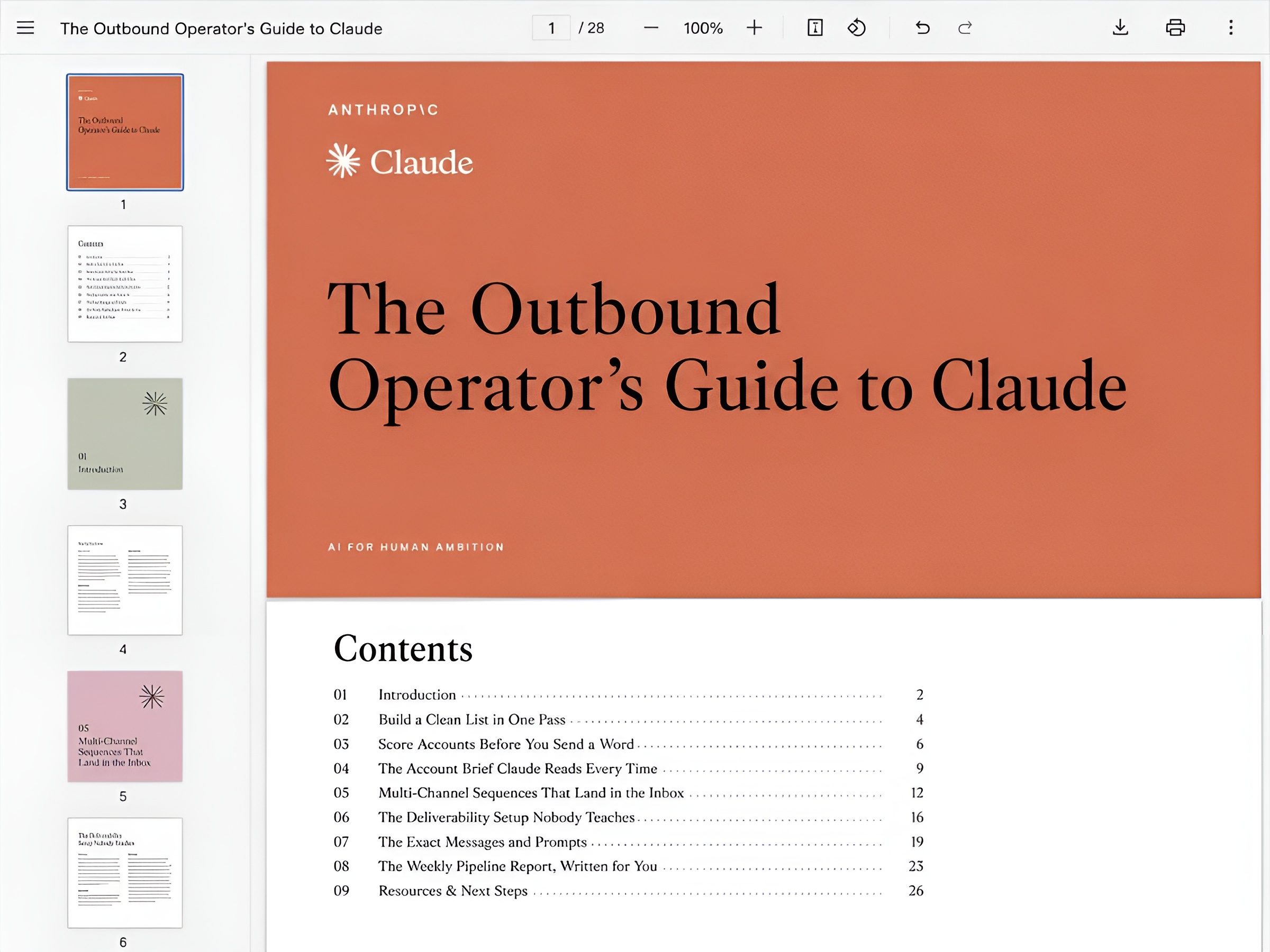
About the Outbound SDR Operator Guide
Most SDR teams spend more time cleaning lists than sending them. Bought contacts with broken fields, titles that don't match the ICP, and sequences launched into accounts that were never going to buy. That's not a volume problem. It's a workflow problem, and it compounds every week you don't fix it.
The standard fixes don't hold. Buying a better list still leaves you with cleanup. Generic AI prompts produce generic copy that reads like every other cold email in the inbox. And most sequencing guides stop at the template, skipping deliverability, scoring logic, and the reporting that tells you which accounts to chase next. You end up with tools, no system.
This guide is a copy-paste operating system built from live campaigns. It covers the full stack from ICP filtering in Apollo and Sales Navigator, to trigger-based scoring in Clay, to a master account brief that keeps every Claude prompt on-brand without re-explaining context, to deliverability thresholds you can hold your team to, to a weekly pipeline report ready before your Monday standup. Every step is specific enough to hand to a new SDR on day one.
The top outbound teams message the 200 accounts in-market right now, not the 2,000 that fit on paper. Scoring for signals like fresh funding, new executive hires, and relevant job posts is what separates a pipeline from a send count.
Here is what you will walk away with this infrastructure:
Build a clean, sendable ICP list in one pass using Apollo and LinkedIn Sales Navigator filtered by title, headcount, tech stack, and funding stage, so you never spend an hour repairing records before a campaign launches.
Score accounts by buying signals using Clay and Crunchbase, pulling trigger events like fresh funding rounds and new hires, so your sequences go to the 200 accounts most likely to reply, not the 2,000 that just fit a filter.
Write a master account brief once that feeds every Claude prompt with your ICP, ARR bands, dead-deal reasons, and banned phrases, so every message lands on-brand without re-explaining context each time.
Set up multi-channel sequences across email and LinkedIn using Instantly, Smartlead, and HeyReach with touches timed across both channels, so you show up consistently without burning your sending domain.
Hold your deliverability to specific, measurable thresholds, bounce rate under 2 percent, spam complaints under 0.1 percent, 30 sends per mailbox per day, so your emails reach the inbox instead of spam.
Run a weekly pipeline report that surfaces sends, reply rate, positive reply percentage, meetings booked, and the three accounts to chase next, so every Monday standup starts with a clear answer to what to do this week.
The full system is 28 pages and ready to use today. Pull it down, drop it into your workflow, and start the week with a list worth sending.