CPA Client Acquisition System
20 Claude Opus Skills That Book Startup Clients Before Competitors Do
Boutique CPA firms lose startup engagements because they see the signal too late. This guide gives you a six-stage AI system that monitors Form D filings, scores prospects by fit, drafts researched outreach in your voice, and delivers a call brief 30 minutes before every conversation. Twenty Claude Opus prompt-based skills, built on Deloitte-style workflows, ready to run inside your firm.
- Monitor 8 public sources for Form D and funding signals
- Score and rank prospects using metro deal flow data
- Draft first messages anchored to a specific trigger, not a template
- Manage approvals and replies without improvising
About the CPA Client Acquisition System
Boutique CPA firms lose startup clients not because they lack skill, but because they show up late. A startup that files a Form D today will have an accounting firm relationship within 30 to 60 days. If you are not in front of them in week one, you are competing against a firm that already is. The SEC reported a 15% increase in Form D filings last quarter alone. That is hundreds of funded startups in major metros who needed accounting infrastructure and chose someone else because that someone else saw the signal first.
The default response has been to hire a business development person, buy a list, or lean harder on referrals. None of these work at the speed early-stage companies move. Lists are stale. Referrals are unpredictable. A BD hire without a system is just manual outreach with a salary attached. Generic CRM sequences and templated LinkedIn messages produce low response rates because they are not anchored to anything real. A founder who just closed a seed round can tell the difference between a firm that tracked their raise and a firm that spray-blasted a list.
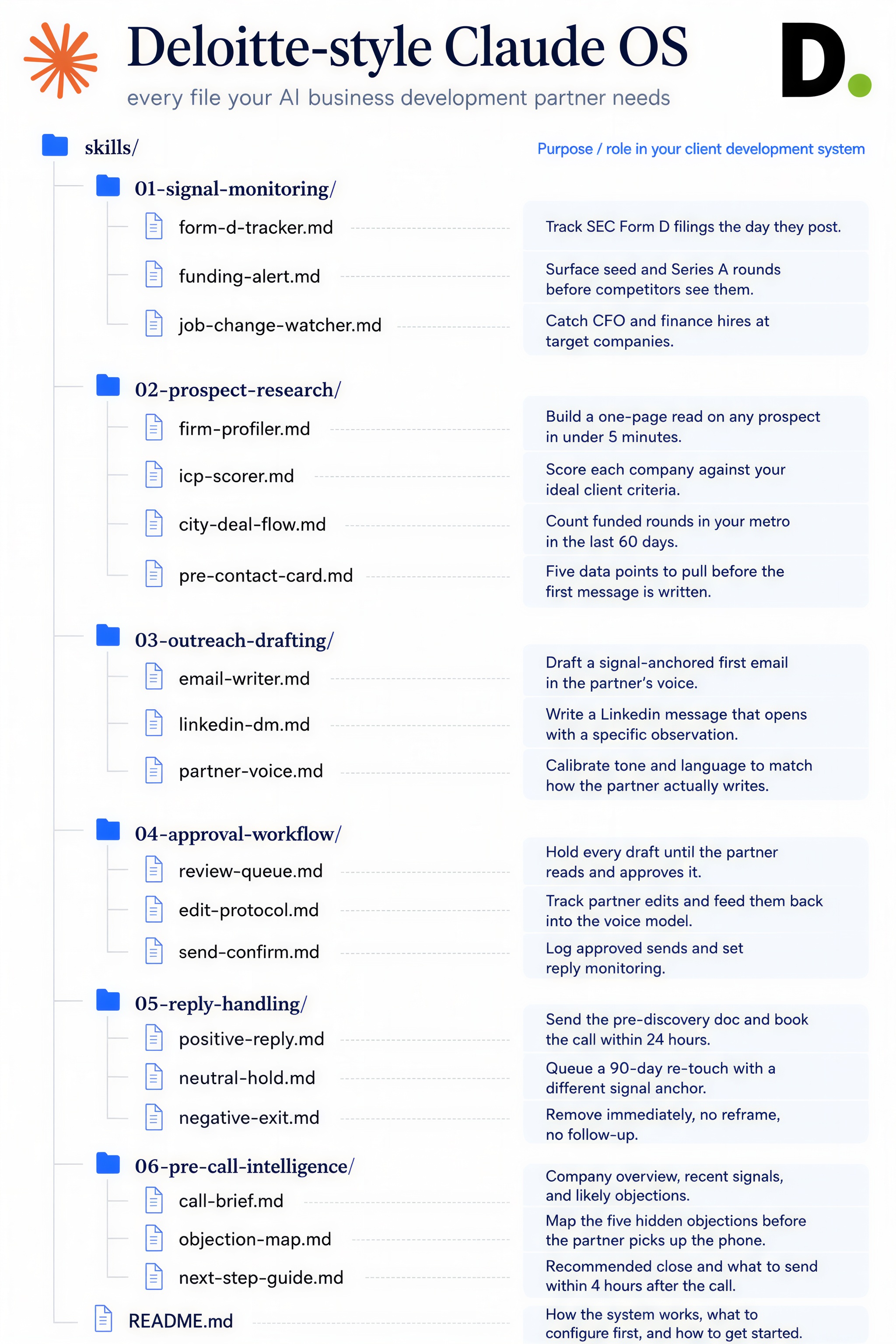
Deloitte Signals is a 20-skill, Claude Opus-powered client acquisition engine built specifically for boutique CPA firm principals. It monitors eight public data sources to surface startups the day they enter the market. It scores and ranks prospects by ICP fit using live metro deal flow data. It drafts researched first messages in your documented voice, tied to the specific trigger that surfaced the company. It manages approvals so nothing goes out without a partner sign-off, structures reply handling for every scenario, and delivers a full call brief with an objection map 30 minutes before every conversation. This is not a collection of AI prompts. It is a repeatable six-stage system built to run the same way every time.
Form D filings increased 15% last quarter. Every one of those companies needs accounting infrastructure. The CPA firm that sees the filing on day one wins the relationship.
Here is what you will walk away with this resource:
Set up automated monitoring across eight public data sources, including SEC EDGAR Form D filings and LinkedIn job change alerts, so you identify funded startups in your metro before any other firm in your city does.
Score and rank every prospect by ICP fit using a structured research protocol that pulls metro deal flow from the last 60 days and surfaces the five data points you need before a single message is written.
Draft researched outreach emails and LinkedIn DMs in your firm's documented voice, anchored to the specific funding or hiring signal that surfaced the company, not a generic template.
Run a structured approval workflow so every message is reviewed and confirmed by a partner before it sends, with a clear edit protocol that keeps the queue moving without bottlenecks.
Handle every reply scenario, positive interest, neutral hold, and negative exit, using defined protocols so no partner has to improvise when a target firm writes back.
Walk into every discovery call with a full brief that covers what triggered the lead, what objections to expect, and exactly what to send within four hours after the conversation ends.
Every week you run manual outreach, a funded startup in your metro chooses a faster firm. This system closes that gap starting with the first signal it catches.